
How Smart ID Tag Programs Reduce Shelter Intake and Get Pets Home Faster
Every animal welfare organization is under pressure. Intake numbers remain high, staffing is tight, and budgets are stretched. Yet one of the most effective ways to reduce shelter burden does not happen inside the shelter at all.
It happens before a lost pet ever arrives.
Smart ID tag programs are helping communities reunite pets with their families faster, often in the field, and significantly reducing unnecessary shelter intake. This is not theory. It is supported by real world data and lived experience from both pet owners and animal welfare professionals.
Most Lost Pets Are Found by the Community, Not the Shelter
When a pet goes missing, the first person to encounter them is rarely a shelter employee. It is a neighbor, a passerby, or a Good Samaritan who wants to help but does not know what to do next.
The 2022 Return to Home study conducted by PetHub in partnership with the National Animal Care and Control Association (NACA) revealed a critical insight: Pet owners reported that the most effective tools for getting lost dogs home were physical search, visible ID tags, and digital tools like social media and neighborhood apps.

These are all tools that work best before intake, not after.
Yet many animal welfare organizations still rely on reunification systems that only activate once a pet enters the shelter. That delay often leads to longer holds, higher costs, and unnecessary stress for pets, staff, and families.

Why Traditional ID Approaches Fall Short
Most pets have one or more forms of identification, but each has limitations.
Microchips are invaluable but require specialized scanners and staff time. They also assume the pet will be transported to a facility before any reunification attempt is made.
Traditional engraved or stamped tags are visible, but they are static. When phone numbers change or emergency contacts are unavailable, the tag stops working as intended.
The Return to Home study highlighted a disconnect between available technology and how often it is used or understood. Many pet owners value modern reunification tools but do not always know they exist or how to use them effectively.

This is where smart ID tag programs change the equation.
What Makes a Smart ID Tag Program Different
A smart ID tag program is designed around speed, accessibility, and flexibility.
PetHub smart tags combine three critical elements:
A visible QR code that can be scanned by any smartphone
A live digital pet profile controlled by the pet parent
A 24 hour Found Pet Hotline that provides human support when needed
When someone finds a lost pet, they do not need an app, a scanner, or training. They simply scan the tag or call the number on it.

That immediacy matters.
Pet parents can update contact information in real time, add alternate contacts, and share key notes that help a finder act safely and confidently. The tag remains useful even as life circumstances change.
Smart Tags Support Intake Diversion in the Field
One of the important findings from lost pet research is that most pets do not travel far from home. Many are found within their own neighborhood or nearby.
When a finder can quickly access accurate contact information, reunification often happens without shelter involvement at all.
This is intake diversion in action.
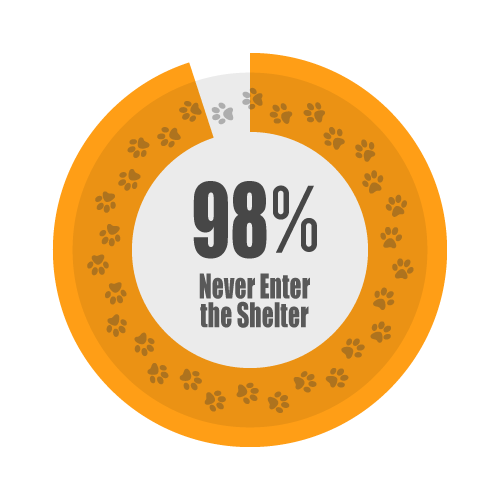
For shelters and municipalities, this means:
Fewer lost pets entering the system
Reduced kennel occupancy
Shorter length of stay for pets that do arrive
Less staff time spent on lost and found cases
Smart ID tags shift reunification upstream, where it is faster, kinder, and more cost effective.
Benefits Beyond Reunification
Smart ID tag programs deliver value well beyond getting pets home.

For animal welfare organizations, they help:
Modernize licensing, rabies, adoption, or community ID programs
Increase participation by offering something pet parents actually value
Build trust with residents through visible, humane outcomes
Collect data that supports program evaluation and funding conversations
For communities, they reinforce the idea that keeping pets safely at home is a shared responsibility, supported by accessible tools.
What to Look for in a Smart ID Tag Partner
Not all smart tags are created equal. When evaluating a program, look for:
No required app for finders
Multiple contact paths including phone and digital
Owner controlled privacy and updates
After hours support through a live hotline
Reporting and visibility into program performance
Most importantly, look for a partner that understands animal welfare operations, not just technology.
Conclusion: Keep Pets Home and Reduce System Strain
The evidence is clear. The fastest, most effective reunifications happen before a pet ever reaches a shelter door.
Smart ID tag programs empower communities to act, help pet parents stay connected, and allow shelters and municipalities to focus resources where they are truly needed.
Reducing intake does not always require more space, more staff, or more funding. Sometimes, it starts with a better tag and a smarter system behind it.
Explore a Smarter ID Tag Program
If your organization is looking to reduce intake, modernize your tag program, or improve reunification outcomes, PetHub Solutions can help you design a program that fits your goals and your community.
Let’s talk about what intake diversion could look like where you serve.


Comments